

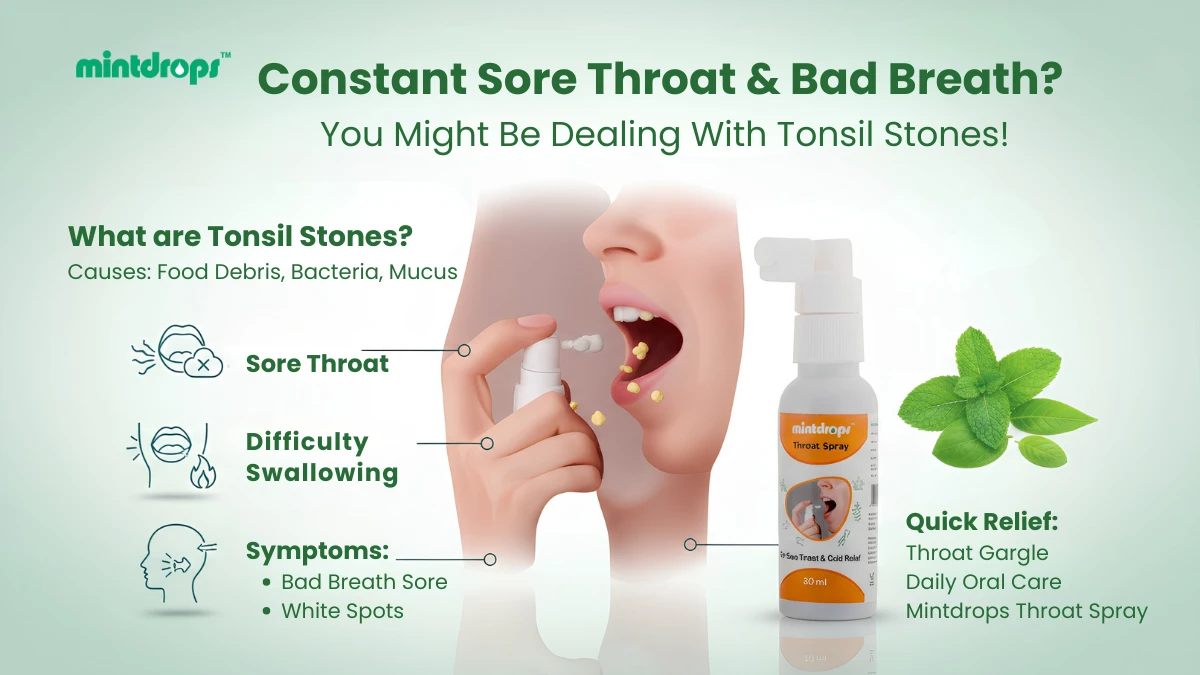
You’ve been fighting this sore throat all year, trying every immunity booster and throat lozenge known to humankind. You’ve avoided social events due to bad breath and find the thought of giving up your favorite treats just depressing. What if it isn’t a persistent cold virus that’s to blame, but something else entirely, just sitting at the back of your throat?
If you’re dealing with a constant bad taste in your mouth, frequent sore throats that last for weeks (more than a month!), difficulty swallowing, or even the sensation that something’s stuck in your throat, then you might be suffering from tonsil stones (tonsilloliths). And trust me, these little calcified bits are no fun! Some people even report seeing small white bits at the back of their throat.
What Exactly Are Tonsil Stones?
Your tonsils are two round, fleshy masses at the back of your throat that act as incredible guardians of your immune system. Their job is to “catch” and eliminate germs trying to enter your body through your mouth and nose.
But your tonsils aren’t completely smooth; they have natural pockets, called tonsillar crypts, that unfortunately catch all sorts of debris: pieces of food, dead cells, bacteria, and mucus. Over time, these trapped substances combine with minerals often calcium from your saliva, and harden into small, usually white or yellow, calcified bits called tonsil stones. Think of them as tiny, stinky pearls of debris!
These stones contain a biofilm, a complex community of various bacteria along with calcium salts and other minerals. Often small, they can vary in size from tiny specks to quite large formations, especially in older people. In fact, they’re more common than one might imagine, affecting up to 10% of the population.
How Do I Know if I Have Them?
Larger tonsilloliths can be quite a bother, while smaller ones may go completely unnoticed. Common signs include:
- Persistent Bad Breath: Often described as a “rotting egg” smell, tonsil stones are a major contributor to halitosis through the volatile sulfur compounds produced by the bacteria within them. These compounds are present in large amounts in tonsilloliths and are strongly linked to bad breath in cases of chronic tonsil inflammation.
- Sore Throat / Foreign Body Sensation: You might feel like something is stuck at the back of your throat or experience discomfort or pain, especially when swallowing.
- White Spots: You may actually see visible white or yellowish material on your tonsils.
- Metallic or Bad Taste: A lingering unpleasant taste in your mouth.
- Cough or Earache: Large tonsilloliths can sometimes irritate the throat enough to cause coughing or even referred ear pain.
Sometimes, they’re even discovered incidentally during X-rays or CT scans done for other reasons.
Why Am I Prone to These Pesky Stones?
It’s a common question, and while there’s no single definitive answer, several factors can increase your likelihood:
- Tonsil Anatomy: Larger or deeper tonsillar crypts provide more hiding spots for debris.
- Poor Oral Hygiene: Inadequate brushing, flossing, and tongue cleaning allow bacteria and food debris to accumulate, which can later settle into the tonsil crypts.
- Recurrent Throat Infections: Repeated bouts of tonsillitis or chronic inflammation of the tonsils can make them more prone to trapping debris.
- Other Factors: Reduced saliva production, allergies, sinus issues, and frequent colds (which cause post-nasal drip) can all contribute by reducing natural flushing or increasing inflammation that traps debris.
Kicking Tonsil Stones and Taking Back That Freshness
Since tonsil stones are generally benign, treatment isn’t required if they don’t cause symptoms. However, if they lead to frequent bad breath, discomfort, or infection, it’s worth addressing them. Tonsillectomy is usually reserved for severe or recurring cases, but simpler methods are often tried first. It’s important not to attempt removal yourself with sharp objects, as this can cause injury or infection.
Here’s how you can proactively manage tonsil stones and maintain overall oral health:
- Gargle Regularly: Vigorous gargling with warm salt water or an alcohol-free natural mouthwash can help dislodge smaller stones, reduce bacteria, and soothe throat irritation.
- Gentle Manual Removal: Visible and easily reachable stones can be gently dislodged using a clean, dampened cotton swab.
- Consistent Oral Hygiene: Maintain thorough daily brushing, flossing, and tongue cleaning to reduce bacteria and trapped food particles.
This is where Mintdrops Throat Spray, formulated with the power of Ayurveda and natural ingredients, can be a wonderful daily ally not just for symptom relief, but for maintaining your overall oral ecosystem:
- Soothes and Protects: Mintdrops Throat Spray uses a blend of natural Ayurvedic ingredients with anti-inflammatory and antimicrobial properties that help reduce inflammation in your throat and tonsils, making the crypts less likely to trap debris.
- Targets Bacteria & Biofilms: The natural ingredients minimize harmful bacteria and disrupt bacterial biofilms, the foundation of tonsil stones. This naturally reduces the “raw material” for stone development and effectively fights bad breath at its root.
- Hydrates & Refreshes: Unlike conventional lozenges or sprays that may dry out your mouth or contain harsh chemicals, Mintdrops Throat Spray helps maintain moisture and a balanced oral environment. This supports your body’s natural flushing process and lowers the risk of stone formation.
- On-the-Go Defense: Its convenient spray format makes it easy to use throughout the day after meals or whenever you feel throat irritation. It provides continuous support for your oral health, helping to prevent debris buildup and naturally refresh your breath.
By integrating Mintdrops Throat Spray into your routine, you’re not just getting instant relief for a sore throat you’re creating an oral environment that makes tonsil stones far less likely to form, while naturally fighting bad breath.
When to Seek Professional Help
If you suspect that you have tonsil stones and experience persistent bad breath, chronic throat discomfort, difficulty swallowing, or recurrent infections, consult your dentist or an ENT (Ear, Nose, and Throat) specialist. They can properly diagnose the issue and recommend a treatment plan, which may include professional removal, laser treatment (to smooth the tonsil surfaces through laser cryptolysis), or, in severe cases, tonsillectomy.
Don’t let tonsil stones undermine your confidence or well-being. Take charge of your oral and throat health today!

