

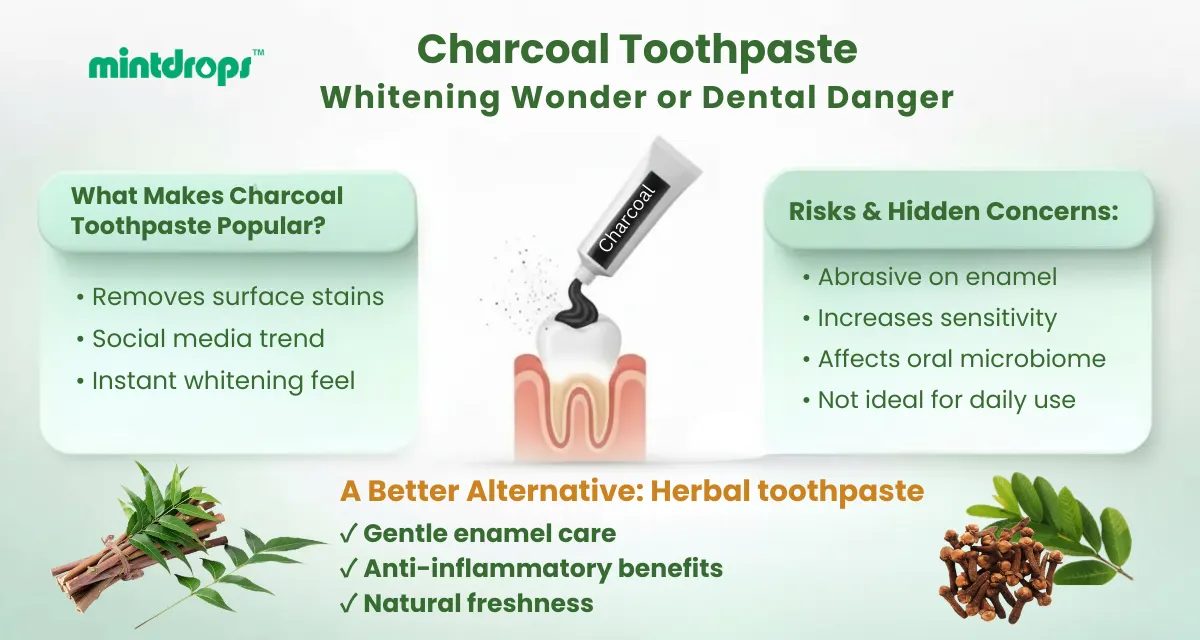
Over the last few years, activated charcoal has gone viral in the oral-care world. Scroll through Instagram, YouTube shorts or TikTok and you’ll find countless “whitening hacks” using jet-black toothpaste. And yes! Activated charcoal does have a few perks!
It’s porous, absorbs surface stains, and gives that instant “just-whitened” feel. But here’s the part that often gets missed: charcoal works only on surface-level discoloration, and overuse can erode enamel if the formulation isn’t well-balanced.
Is toothpaste with activated charcoal really the best long-term choice for your oral health? What Really Makes Charcoal Toothpaste So Popular?
Activated charcoal is often marketed as a “detoxifying” agent because of its ability to bind to impurities. In oral care, that translates to claims that charcoal can lift stains from coffee, tea, or wine, which is music to the ears of any chai-loving professional!
But here’s the catch! Charcoal may help remove light surface stains. Think of it like a scrub that buffs away superficial discoloration. The evidence supporting charcoal as a reliable whitening solution remains limited. Most results are anecdotal, shared by influencers, not backed by rigorous dental trials.
The Hidden Problem: Abrasiveness
Charcoal particles can be harsh. That gritty, sand-like texture may feel like it’s “scrubbing” stains away, but it may also be scrubbing away your enamel.
For professionals constantly sipping hot beverages, dealing with office AC-induced dryness, or experiencing stress-related grinding, enamel erosion is already a concern. Removing even a thin layer can increase:
-
Tooth sensitivity
-
Yellowing (because dentin shows through)
-
Higher risk of cavities
-
Micro-cracks in enamel
Some charcoal toothpastes have RDA (Relative Dentin Abrasivity) levels beyond what dental associations consider safe for daily use.
Impact on Enamel & Oral Microbiome
Your enamel doesn’t grow back! Once it’s gone, it’s gone!
Overuse of charcoal toothpaste may lead to:
-
Roughened enamel surfaces
-
Disturbed Oral microbiome
-
Increased plaque accumulation
-
Heightened sensitivity to hot/cold
-
Risk of gum recession
In other words, your mouth might look cleaner, but it may be more vulnerable!
✨ The Herbal Advantage: Gentle, Effective & Holistic
Herbal toothpaste has quietly been winning the long game. Unlike trend-driven solutions, herbal formulations support oral health at the root. Naturally and gently!
Here’s why more professionals, health-conscious youth, and wellness enthusiasts are switching back to nature:
🌱 Strengthens gums with ingredients like Clove, Neem, Babool, and Mint
🌱 Reduces plaque and bad breath without harsh abrasives
🌱 Supports enamel health, unlike charcoal-heavy products that can be abrasive
🌱 Anti-inflammatory & antimicrobial benefits for long-term gum care
🌱 Chemical-free freshness with no SLS, artificial colours, or synthetic whiteners
🦷 What About Whitening?
Herbal toothpastes don’t promise “viral overnight transformation” — but they do help maintain a naturally bright smile by improving overall oral hygiene, reducing plaque buildup, and preventing stains from settling in.
It’s a sustainable, long-term approach!
🌿 Where Mintdrops Fits In
For those looking for a balance between freshness, cleanliness, and gentle care, Mintdrops Herbal Toothpaste is crafted with natural plant-based ingredients that support daily oral wellness.
No harsh abrasives. No chemical overload. Just clean, nature-backed oral care for real people with real lifestyles.
✔️Conclusion
Activated charcoal may have its moment. But herbal toothpaste builds healthier smiles for the long run.
If your goal is confidence, freshness, and enamel-safe care, nature still wins.
Let trends come and go. Your oral health, however, deserves something that lasts. 🌿

